
The Symbolism of Gemstone Cutting
Since ancient times, people have adorned themselves with symbols. Initially, these were drawings and tattoos on the body, talismans and amulets on clothing, and then – jewelry. And, while jewelry often bore the image of some symbol, faceted stones served only as an addition to the design of the piece, increasing its beauty, attractiveness, and, of course, price. Today's level of technology allows us to imbue the faceted stone itself with meaning, embedding certain symbols in the ornament of its facets.
The first experience of using symbols in stone cutting was the "Philosopher's Stone" collection, created in 2009. Initially, it contained seven stones, now there are ten. The symbolism of the facets of these stones was artistic and figurative. In the pattern of the facets of each stone, one could discern a particular image. A parable was written for each stone, which unfolded this image into a philosophical concept. In essence, two genres of art – literature and gem cutting – complement each other in this collection. I did not mispeak when I called gem cutting an art in this case. After all, what does art do? It evokes a series of figurative associations in a person's mind, having an emotional coloring and awakening the phenomenon of "creative resonance," when a person himself wants to create. Here, the initial setting for a specific image is given by the parable, and the stone, preserving this image, subsequently acts as a "key" that opens a familiar associative series in the mind.
It is important that such a "key-stone," like any art object, is perceived differently by different people. For the uninitiated, it is a simple jewelry insert, a piece of mineral that has been given a certain shape. But, if a person has read the parable and sees the symbol in the pattern of the facets, for him it is more than just a beautiful trinket. It is a friend with whom one can share thoughts about the problem touched upon in the parable and expressed by the symbol of the stone. Moreover, the depth of understanding of this problem depends on the degree of a person's spiritual development.
For example. A stone called "Treasure of the World" participated in the competition. It has the shape of a diamond when viewed from the side, in profile. And the crown of the stone reproduces the pattern of the facets of a diamond cut. But this is the external side, what is visible. On the pavilion, however, hidden from the observer's eyes, a star shines, as if emphasizing that behind obvious values there may be things of a deeper nature. The parable associated with this stone speaks of the same thing: one day a person will have to name their main treasure, and a mistake here can be very costly. Now, moving to purely practical terms, we can say that these stones have found a new niche for themselves in the jewelry market – co-reflection, a niche traditionally occupied by books, films, and paintings.
This was the first generation of "philosophical" stones. The symbolism of the second generation of stones has a qualitatively different level; unlike the one just described, it is active.
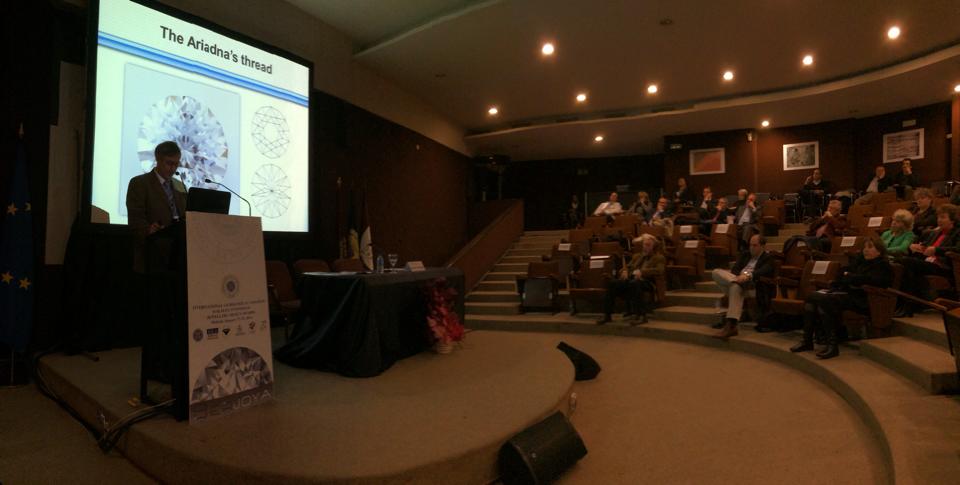
To understand this statement, let's consider an example. A stone called "Ariadne's Thread". It has a round shape, and on the pavilion there are two seven-pointed stars with a common center. One star has "clean" rays, consisting of a single facet; the second star has double-faceted rays, as if darkened by a longitudinal edge. These two stars with a single center are a symbol of our universe – unified in its duality of spiritual (male) and material (female) principles. The rays of the stars are separated (or rather, united) by single wedges forming the girdle – a symbol of all-pervading unity, the invisible fabric of space.
So, the pavilion is the cosmos. The facets of the crown relate to human nature. On the girdle of the stone, a regular seven-pointed star is depicted – a symbol of man, his physical nature, manifested in words and deeds. Inside this figure is a second, smaller seven-pointed star, precisely inscribed within the first. This is a symbol of man's inner nature, manifested in his thoughts, intentions, and motivations. It is worth noting that the sides of both polygons are parallel – the ideal case when a person lives in harmony with their inner world and their thoughts do not diverge from their actions.
Now let's look at how man and the cosmos relate in the stone. In this example, the vertices of the "human" polygon coincide with the vertices of the star of matter. This is the path of an ordinary earthly person, living for the interests of the material world. But if you only "turn" the facets of the crown relative to the pavilion by just one ray during the cutting process – the person depicted on the stone begins to walk the path of spiritual search. This is the path of saints, the path of ascetics living for the common good. And the main work of the stone begins when I hand it to the new owner with the words: "This stone holds your image. Wear it and do not forget about your path and your place in the unity of the cosmos."
What happens then? Many of us know about the materiality of thought. Now, every time a person sees the stone, wears it, admires it, – thought-images associated with the symbolism of the stone arise in the person's consciousness, consciously or unconsciously. And, Drop by drop, these thoughts begin to adjust a person's fate – invisibly, weightlessly, almost imperceptibly. But – who knows? – perhaps it is this weightless correction, like the last straw, that will tip the scales and one day deter a person from an irreparable act…
This was the second generation of "philosophical" stones. Four years is a long time for active creative work, because during that time the first stones of the third generation had already appeared.
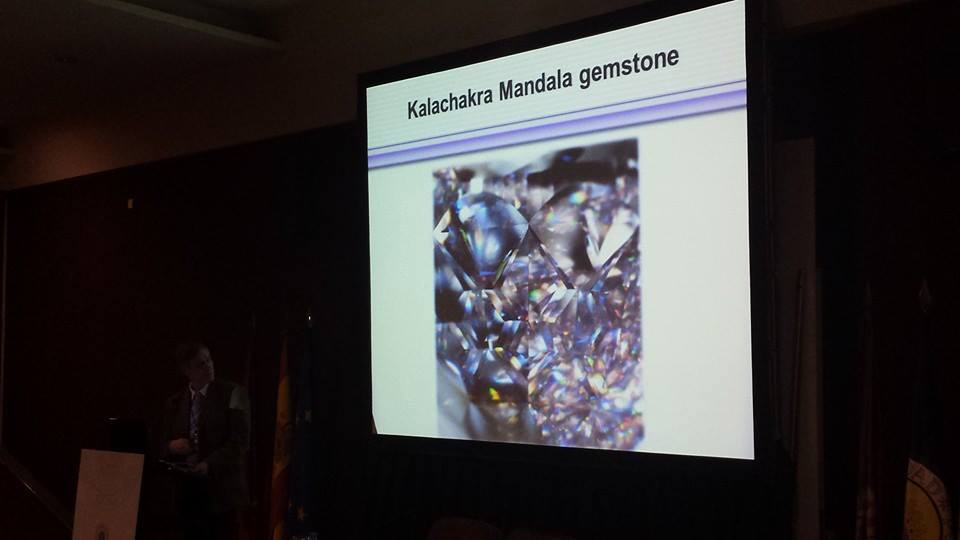
I won't talk about them in such detail, because I myself haven't fully understood the mechanism of their action yet. These are worldview-changing stones, altering a person's consciousness. For example, this stone did that to me. When the stone's design was drawn on the computer, I realized that it was impossible to facet it. And when I took a step beyond the impossible – I became a different person. In one moment, after finishing the work, I saw the world around me in the image of this stone and my consciousness – as the same stone, precisely inscribed within the first one. But inscribed not by vertices, as a square is inscribed in a circle, but by all its facets, all its edges, its entire being. I felt that there are no people separate from me – there is a single Humanity, scattered across different facets of one planet. And every person is me, with all my joys and sorrows. And a single moment of this realization gave me more than all my previous life. I didn't immediately understand what had happened. In essence, while working on the stone, I was faceting an entire world. At the same time, I was faceting myself and, most importantly, the path of my transformation towards the harmony of this world. That's what the third generation is.
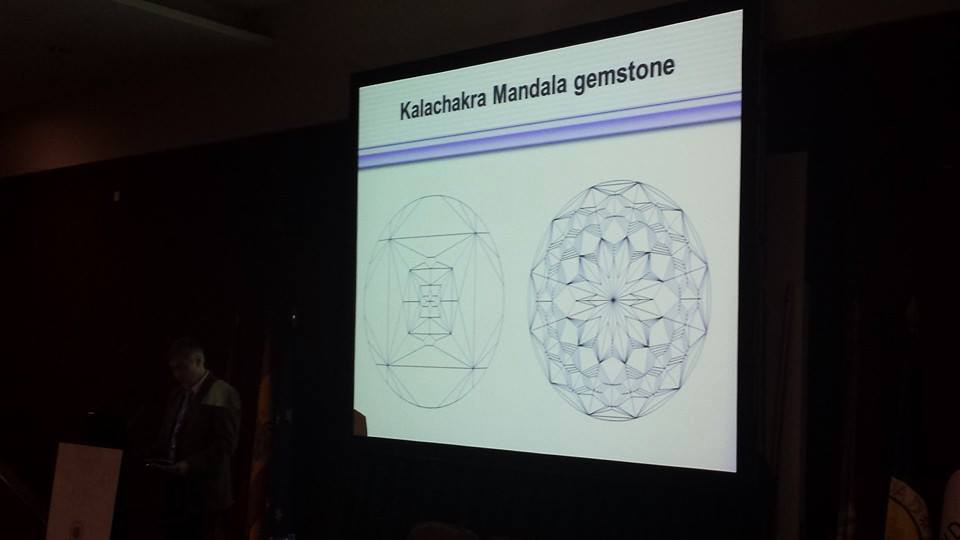
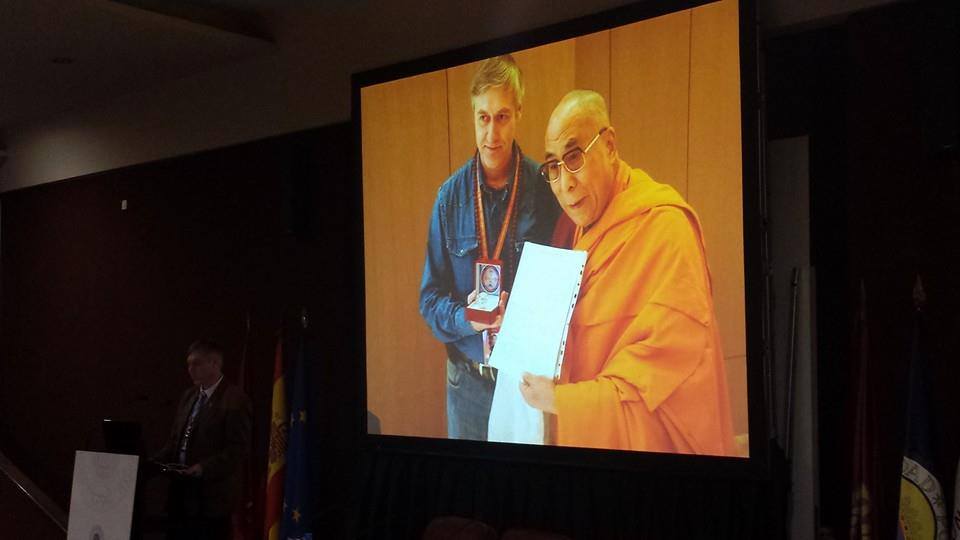
The stone I spoke about was given last year to His Holiness the Dalai Lama, because it symbolically and numerologically represents a Buddhist mandala. The Kalachakra mandala contains 722 elements, and the stone has 722 facets. Each facet reflects one or another aspect of our existence. And the incredible play of light on the facets provides a vivid illustration of the complexity of the interaction of all aspects of the Universe. And this is a good illustration of the idea expressed in one of the first "philosophical" stones, called "Touching Perfection": a true master can use any means for creative self-expression – pen and paper, guitar and microphone, paints and brush, stone and grinding wheel. The main thing is that he has something to say to people and that his thought, crystallized in the work, brings light and joy to people.