

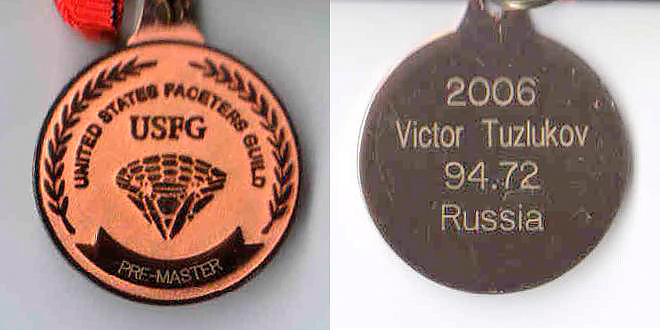
Now I'll tell you about my experience participating in, judging, and organizing cutting competitions. I first competed in the American Cutters Guild competition in 2006. By then, I had gained some experience, and friends advised me to apply directly to the pre-master category, skipping the entry level. Subsequently, I often repeated to my students and audiences at many presentations that that first competition was a turning point, the beginning of my ascent to the heights of precision and perfection in cutting. Back then, I was simply curious to see how my work compared to recognized masters. In preparation for my first competition, I thoroughly studied the judging rules and tried to evaluate my stone myself, looking at it through the eyes of a judge, albeit with my limited experience at the time. It was gratifying to realize that, through me, Russia was participating in cutting competitions for the first time.
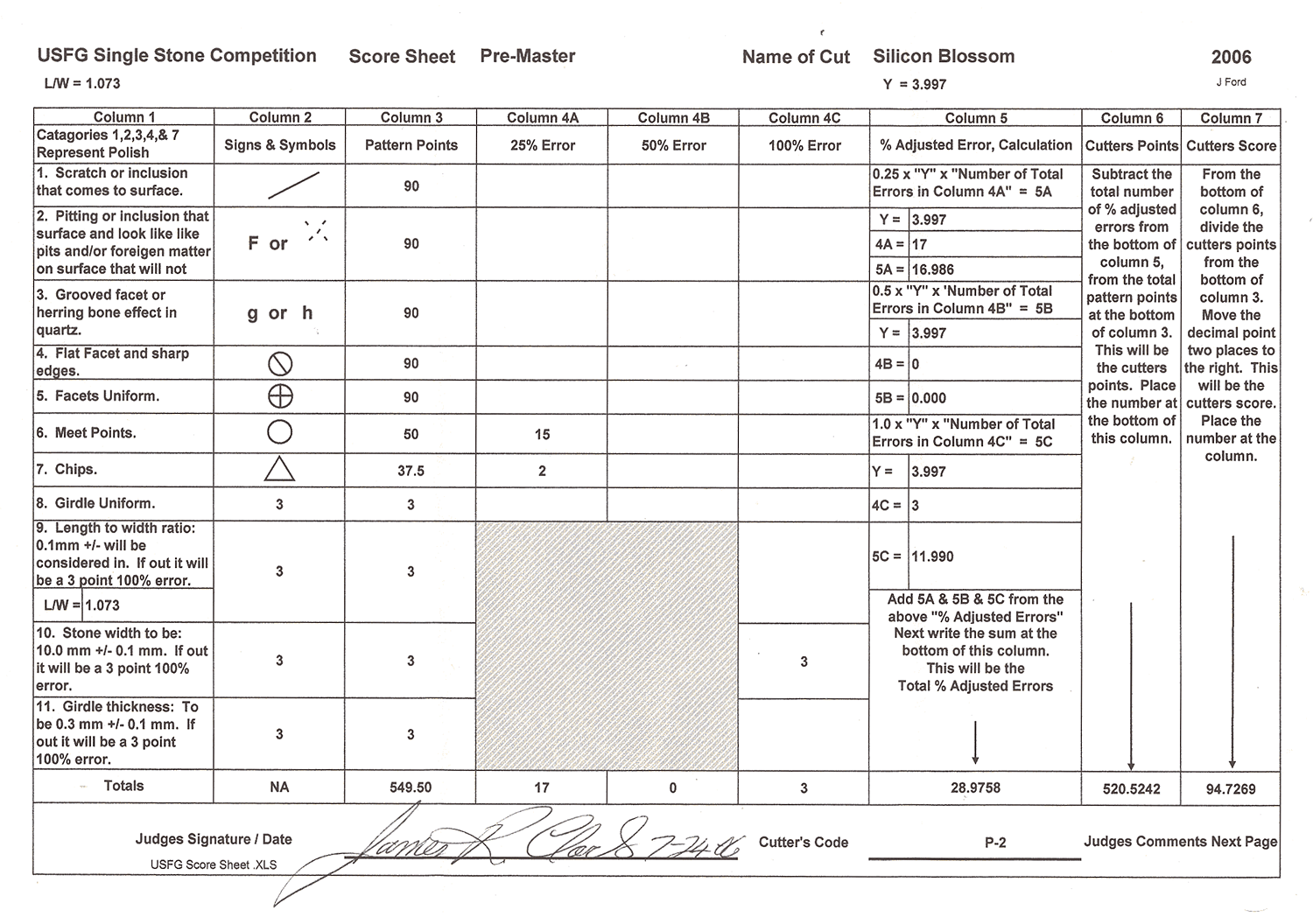
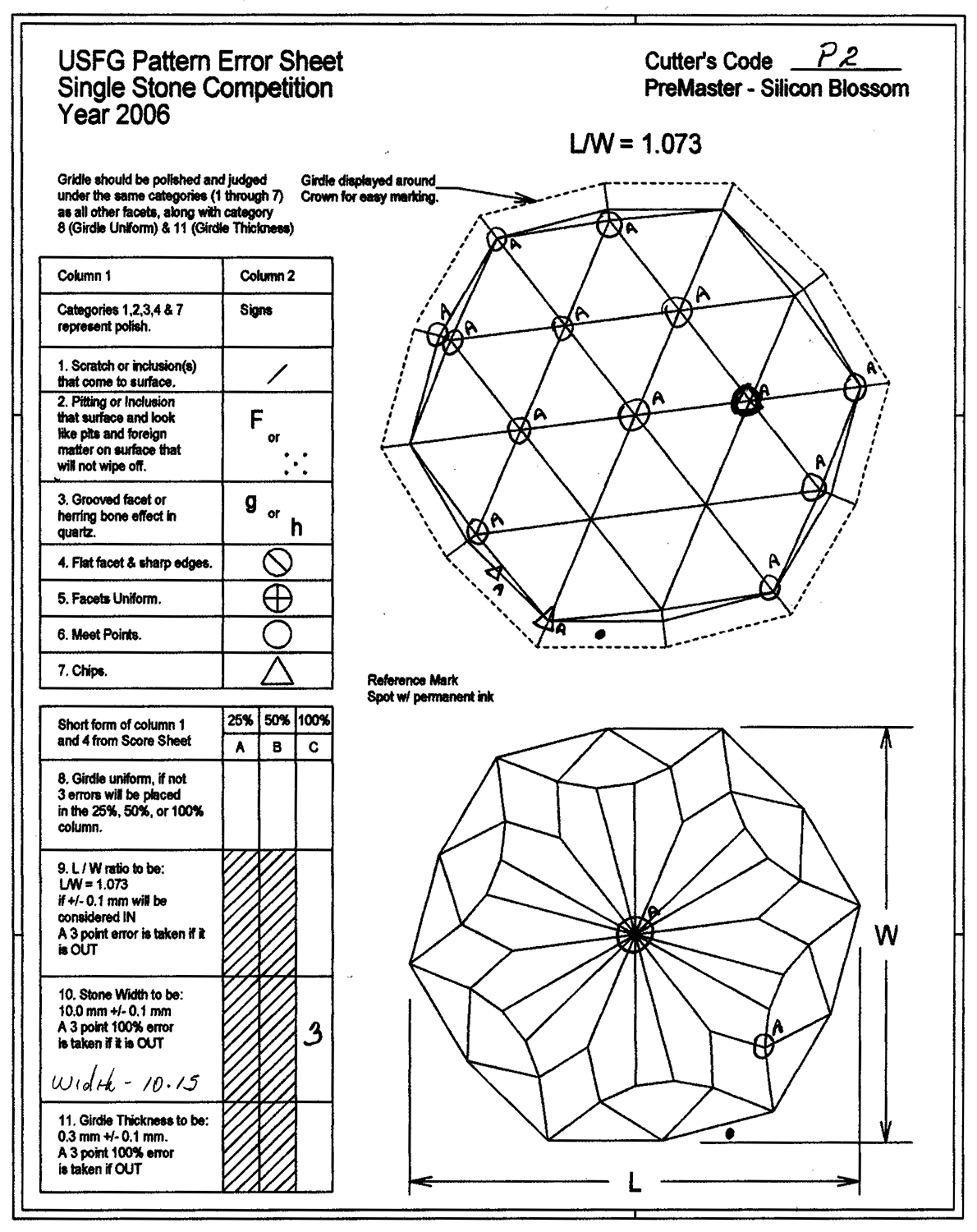
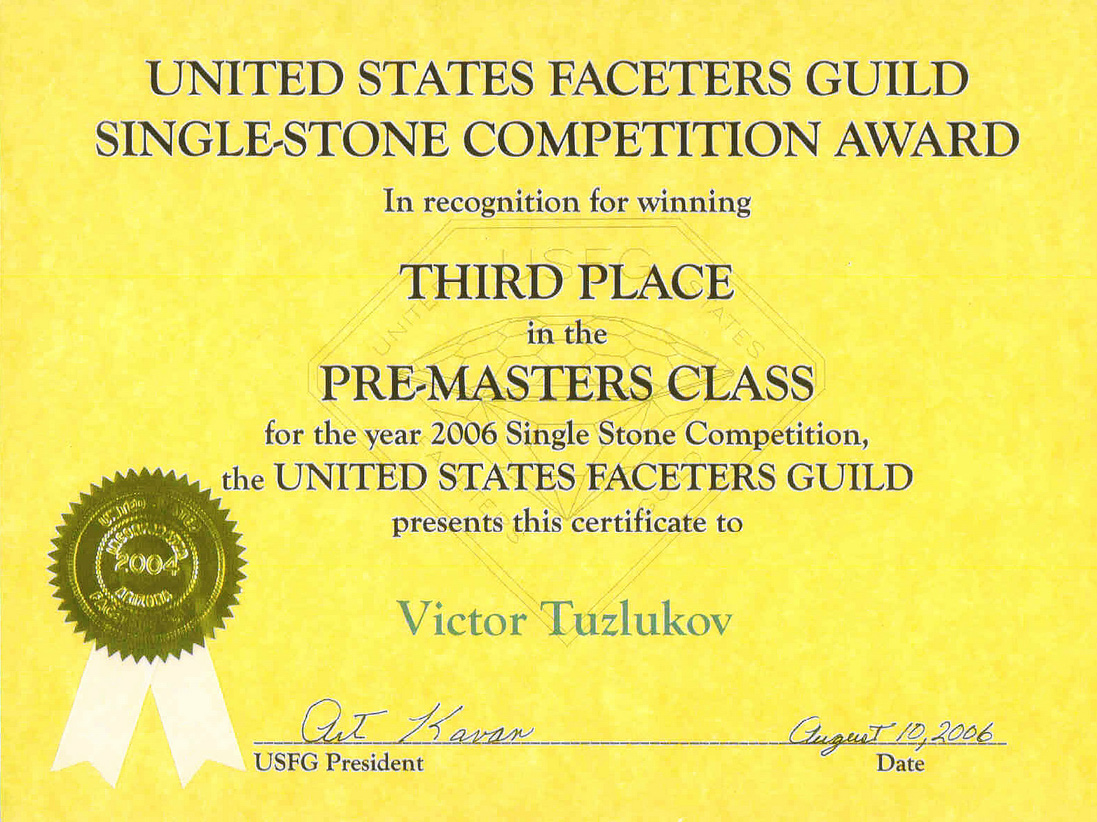
My first result inspired me. Receiving 94.72 points out of 100 and taking third place in my category, I understood the direction and method I needed to work on. I immediately decided to participate again next year – this time among the masters. The competition was much more complex, and the 93 points I received in the higher category could be considered a significant improvement.
2008 can be considered a landmark year for further development. Two-time participation in regional American competitions with relatively high scores paved the way for international competitions in Australia. As I mentioned, these competitions have a more complex structure. In addition to the individual standings, there is also a team standings. If a country has more than five participants, that country can be considered for the team standings, with the results determined by the top five participants.
Typically, only three countries participated in the team competition back then: the USA, England, and Australia, the host country. Russia couldn't compete as a team, as it was represented by a single participant. But back then, I was in no rush to fully realize my potential; I wanted to test the judges' standards. So, I deliberately overlooked some cutting defects I'd "overlooked": a facet that wasn't polished enough, or the edges that didn't quite meet perfectly. Realizing that my approach to quality assessment had become more rigorous, I saw greater opportunities for myself. And, as it turned out, I was right.


Even before the results of the Australian Championship were known, the next competition in America was approaching. Last time, in the "Master" category, I didn't get enough points – I needed at least 95 to move up to the next category. But I had a loophole: according to the competition rules, everyone who participated in the Australian Championship was entitled to compete in the "Grandmaster" category, regardless of the result – that's how high the prestige of those competitions was. Yes, the results were unknown, but they weren't needed – the very fact of participating in Australia opened the way to the top of the One Stone Competition.
Just in case, I coordinated my participation with the president of the American Guild. "We don't actually have a single certified grandmaster yet," the President, Art Kavan, whom I greatly respect, told me, "but give it a try, maybe you'll be the first!" And, having received his consent, I set to work.
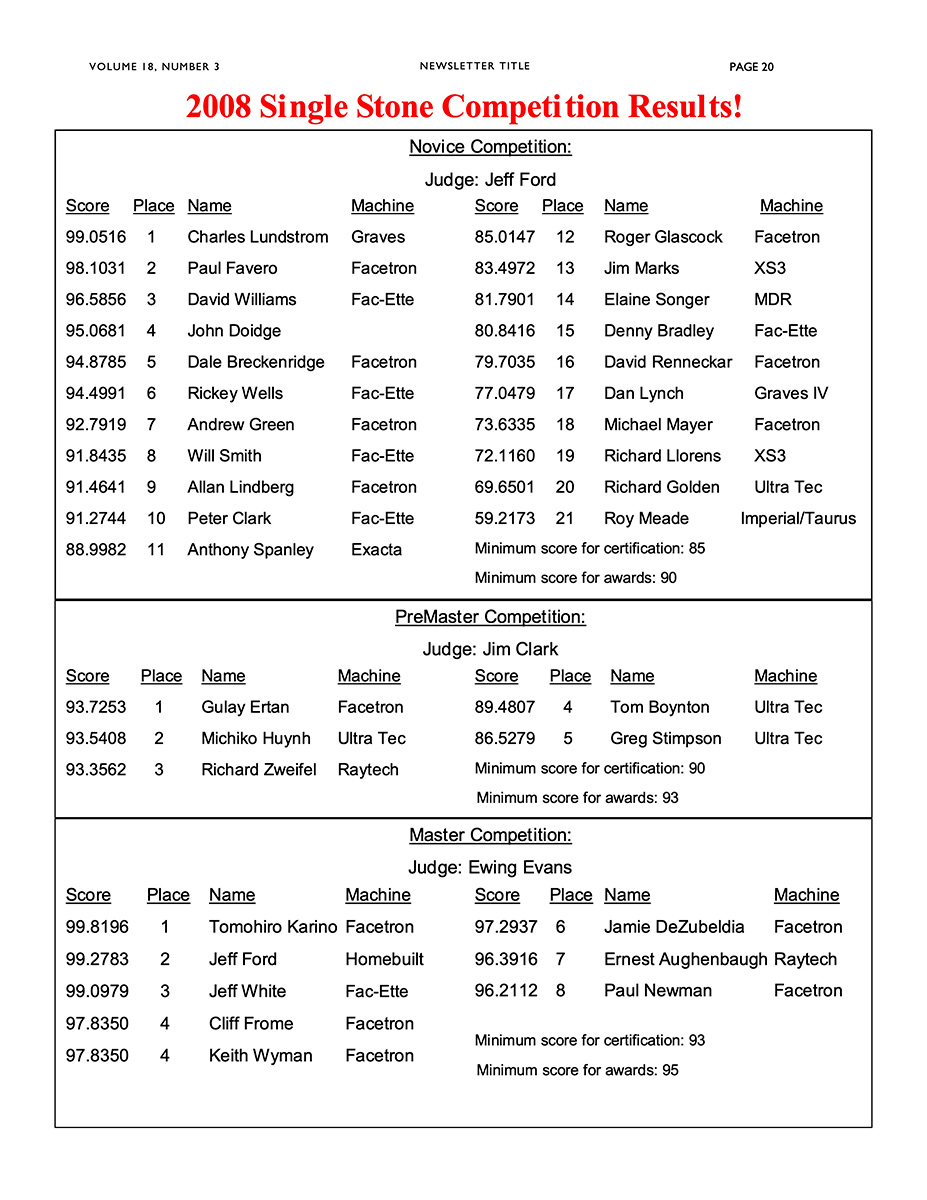
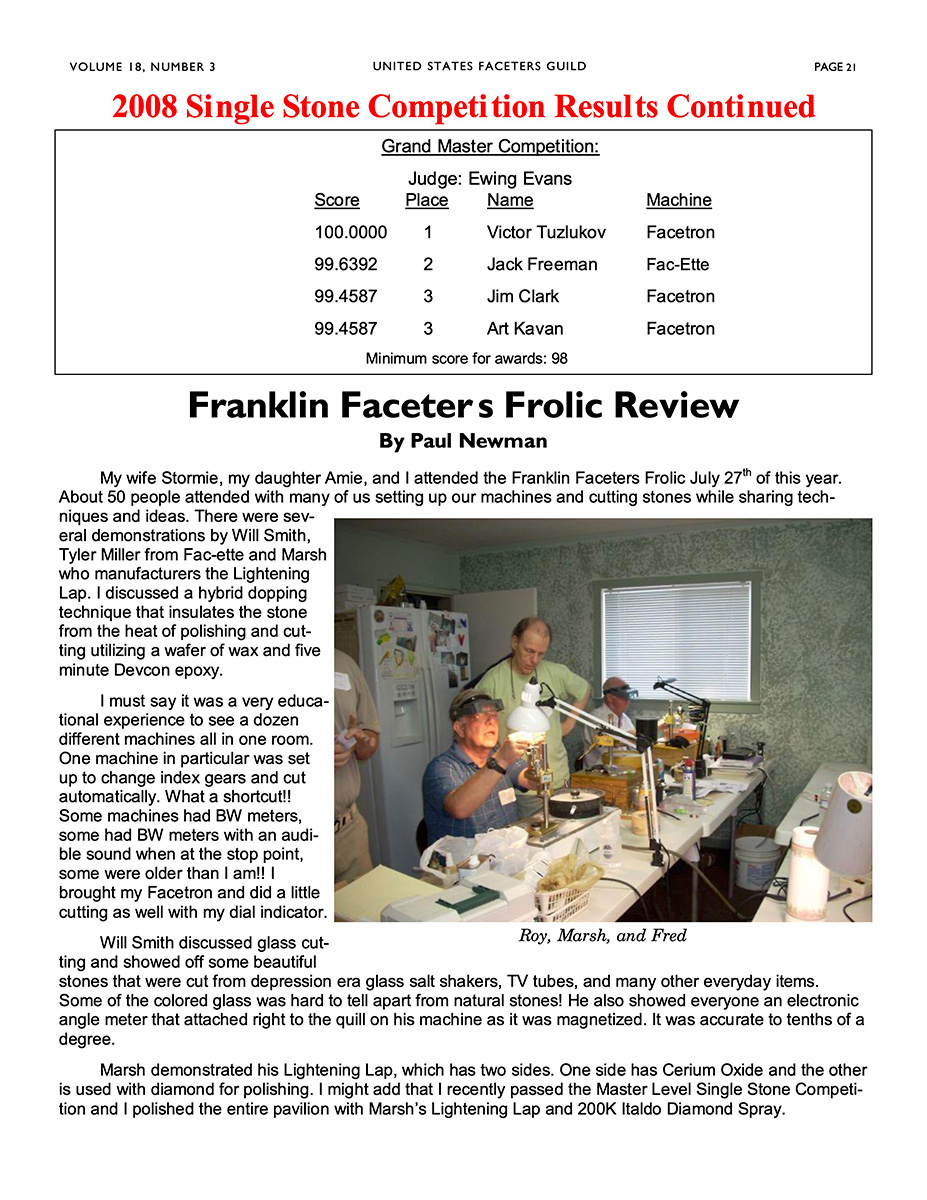
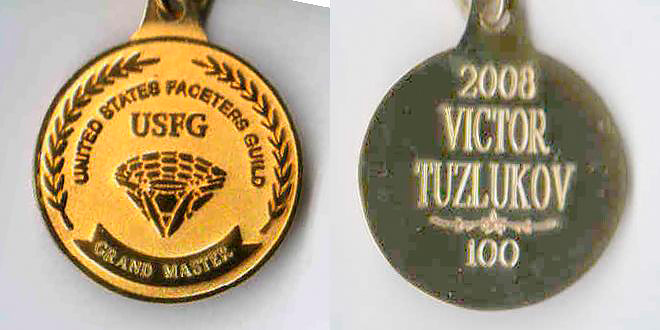
This time, every effort and every opportunity was exerted. And, as it turned out, not only on my part. Apparently, to ensure that this new chapter in the history of the American competition wasn't opened by a foreigner, three of the best American cutters participated in the Grand Master category on the American side – all participants and past winners from Australia, including the Guild President himself. All of them received over 99 points for their work – I had no chance of even making it into the top three… But I received 100, beating out all the American masters.
When I saw the results in the quarterly magazine of the Cutters' Guild, I was stunned. It was... perhaps like winning the Olympics. An absolute result in the highest competition category—it's impossible to surpass, only to repeat. Thus, for the first time, the Russian school of colored stone cutting made a powerful impact on the world. And the following years only strengthened this position.


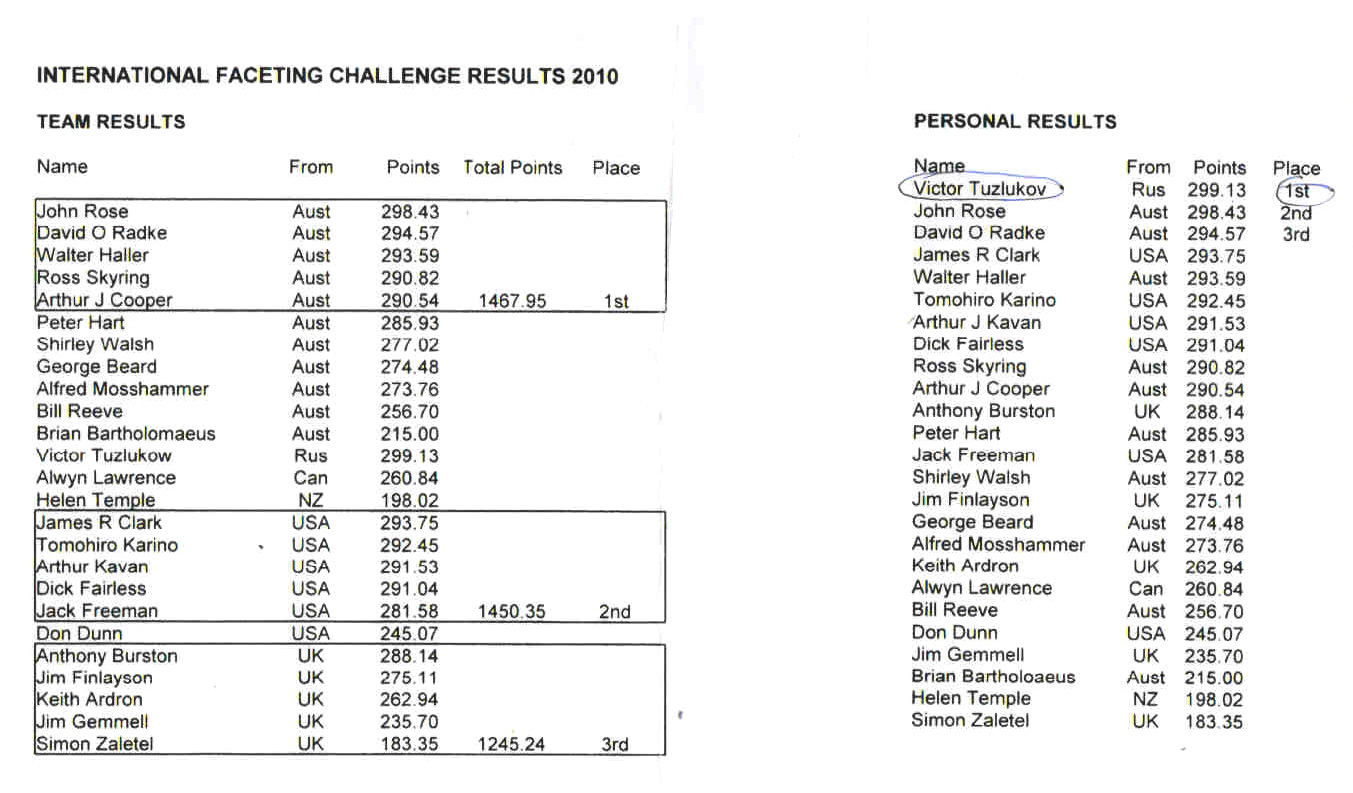
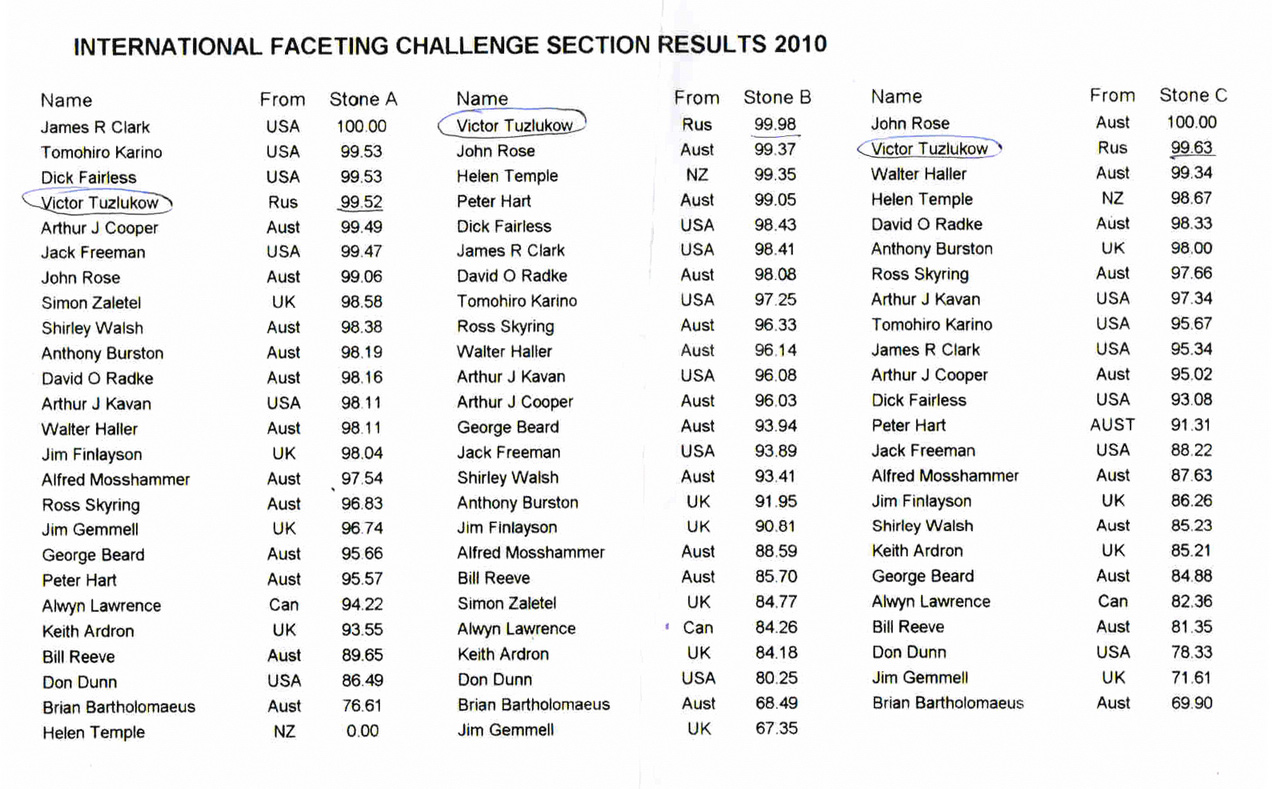
As expected, my result in Australia was quite modest – approximately 285 points out of a possible 300, 15th place in the individual standings out of more than 30 competitors. However, after reviewing the judges' tables, diagrams, and comments, I was pleased to discover that some of the defects I had left behind had been overlooked.
Then I mentally rubbed my hands and began preparing for the next competition in 2010. During my preparation, I had a quiet victory at a competition in England—I didn't consider it a big deal, because the strongest cutters (and, consequently, the strictest judges) were in Australia and America. And then—2010 arrived…
Back then, 15 years ago, there was no talk of a Russian team – only one Russian cutter had experience competing at the world level. And I hadn't yet tried to create a team, knowing that I needed to come to Russia with a world-class reputation. My bet was on the 2010 championship.
And the bet was a winning one: 299.13 points out of 300! (In fact, the judges made a mistake when calculating the scores. In the final table, the score for one of the stones was 0.04 lower than the actual score on the judges' scorecard. But that was no longer important.) A new world record – for the first time in the history of the competition, the 299-point mark was surpassed! Looking ahead, I will say that this record stood for ten years – until 2020, when the athlete from Taiwan, Ilishi Reimi (a student of Daniel Hu, who considers himself my student – therefore, my second-generation student) received exactly three hundred points, becoming the first overall champion!
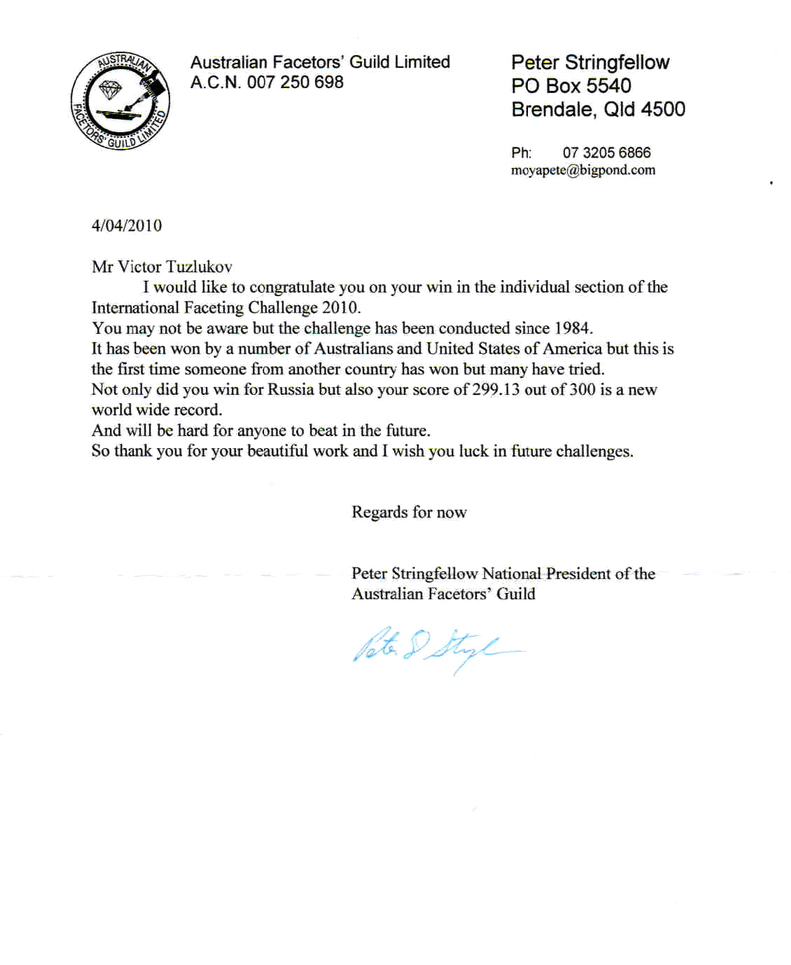
The President of the Australian Diamond Cutters Guild wrote to me in his congratulatory message: "Since 1984, throughout the entire history of our competitions, only Americans and Australians have won, never competitors from other countries, although many have tried. You not only brought victory to Russia, but also won with a new world record that will be very difficult to break in the future..." And now the time has come to cultivate competitive diamond cutters in Russia.


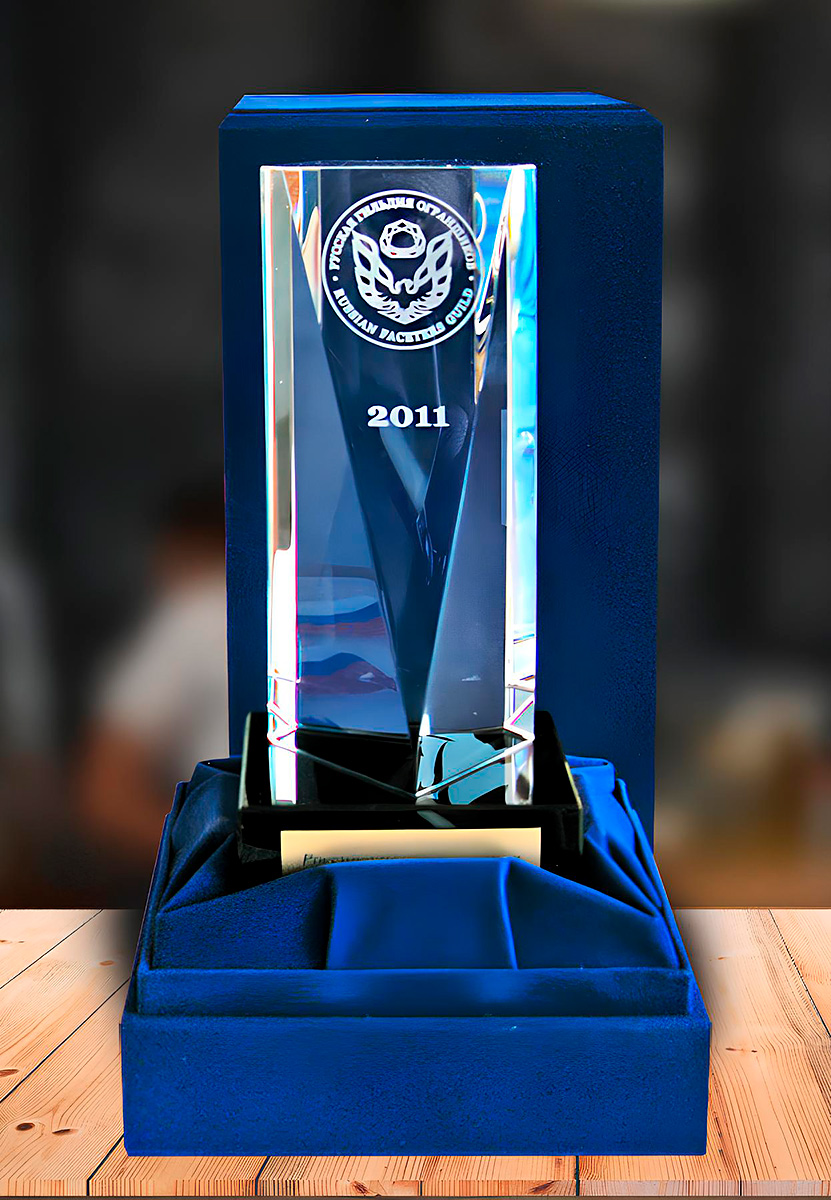
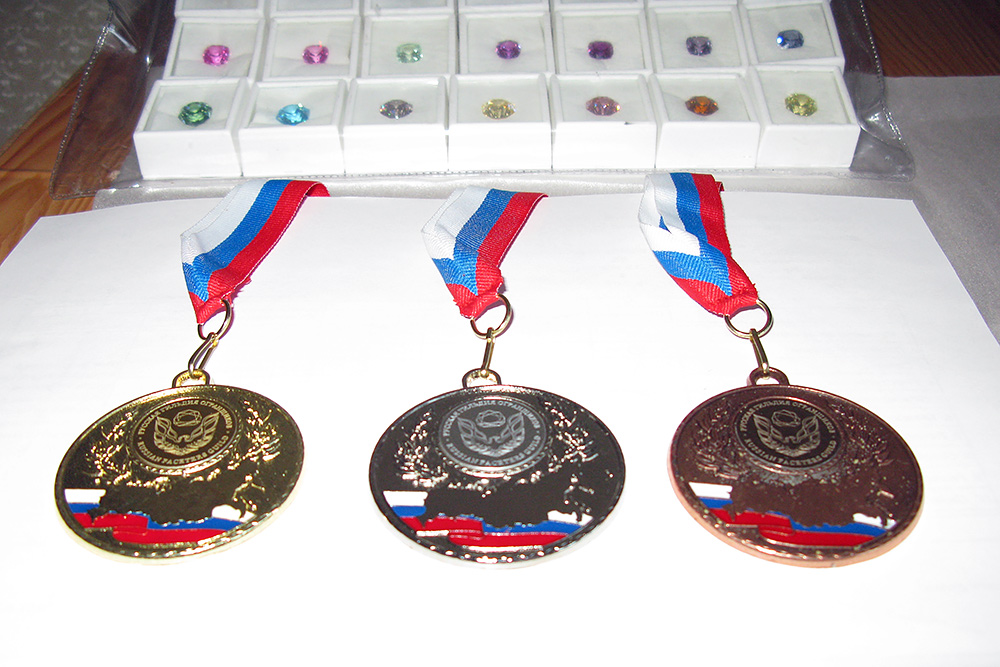
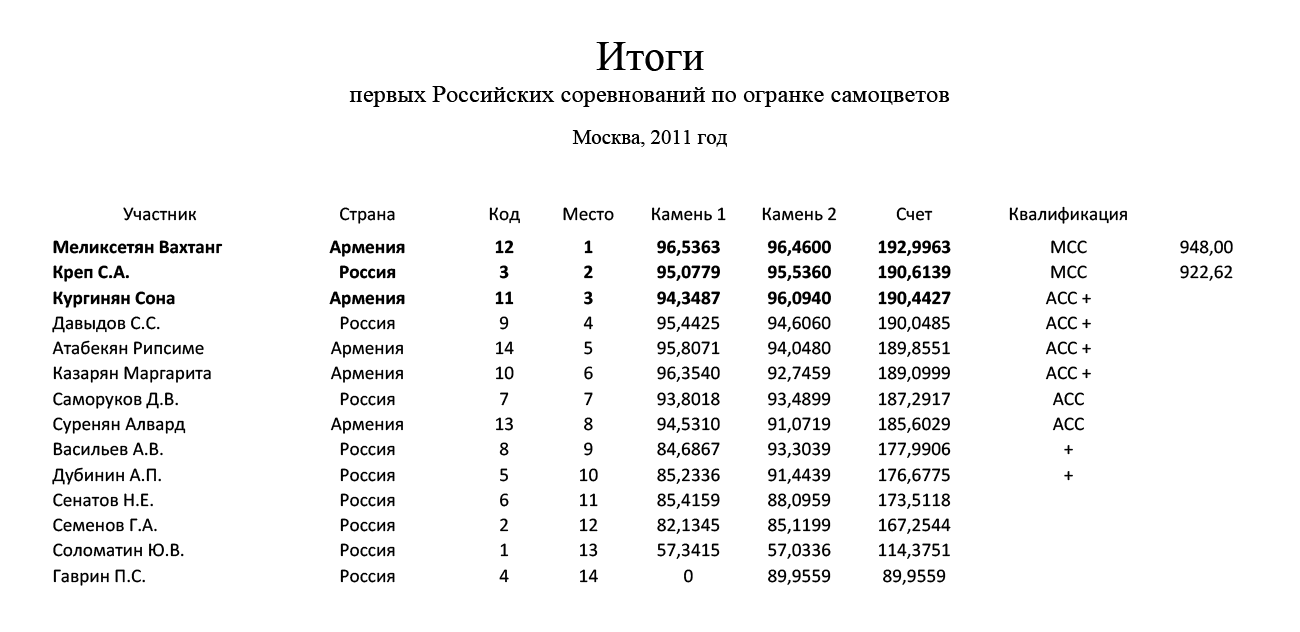
In 2011, drawing on the experience of the "Three A's" (America, England, and Australia), a non-profit public organization was created – the Russian Guild of Gem Cutters. Unlike the professional association "Guild of Jewelers of Russia," this was more of a club for enthusiasts, uniting amateurs for the purpose of exchanging experience, improving skills, developing the Russian school of gem cutting, and preparing future participants in international competitions. There were already professional gem cutters in Russia, but the quality standards of their work – alas! – were far below what was required for competitions. Even experienced professionals needed to go through a school of competitive gem cutting.
The first diamond cutting competition in Russia, held in 2011, became such a school. It was these competitions that gave the initial impetus to excellence to such now-renowned masters as Dmitry Petrochenkov, Dmitry Samorukov, Sergey Krep, and Andrey Dubinin, as well as cutters from friendly Armenia—Vakhtang Meliksetyan, Sona Kurginyan, and Margarita Kazaryan.
The next stage in the development of the Russian school of sport cutting came in 2012. The second competition of the Russian Guild of Cutters became international, with athletes from five countries participating: Russia, Germany, Switzerland, England, and even New Zealand.
They also allowed not only Russia but also Armenia to enter the Australian Championship, which was reported in newspapers in Yerevan (but, for some reason, not in Moscow). The experience accumulated by the Russian cutters allowed them to take second place in the team standings, ahead of the team from the USA.


Around this time, at the turn of 2012/2013, I began training cutters at Entrepreneurship College No. 11 in Moscow, passing on my knowledge not only to young people but also to mature individuals who genuinely wanted to pursue precision cutting. The results were immediate. The 2014 American Guild competition was a true triumph for the Russian School of Sport Cutting. Four of my students competed in the beginner category, three of whom received scores above 99, and one – 98.82. By comparison, the next-closest competitor, from South Africa, scored below 95.
In the Grand Master category, all three prize places were also taken by Russian athletes. Publishing the results of these competitions, the magazine's editor quoted the president of the American Guild: "How can I get to Russia to learn from one of these cutters? Or maybe one of them could pass on their knowledge remotely? Either way, I'm sure we could learn a lot from them..."