

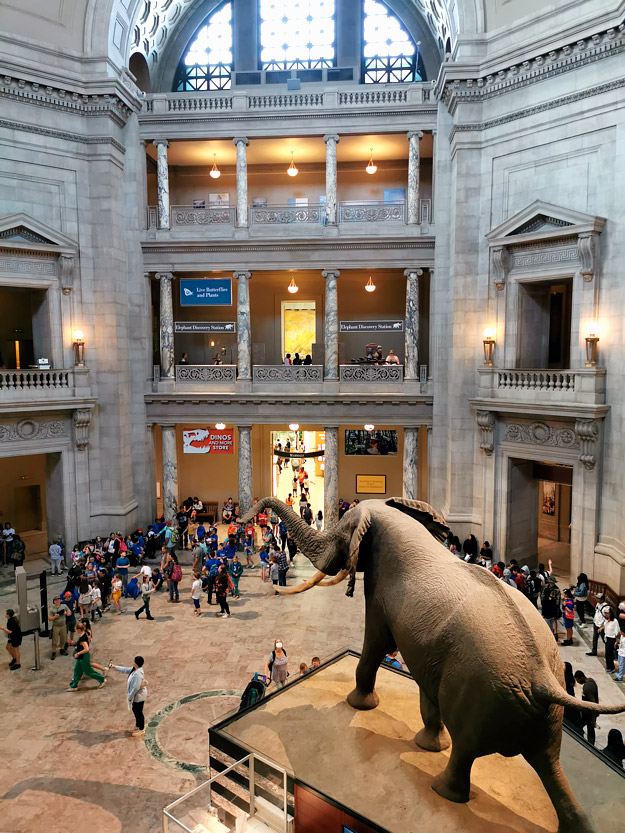
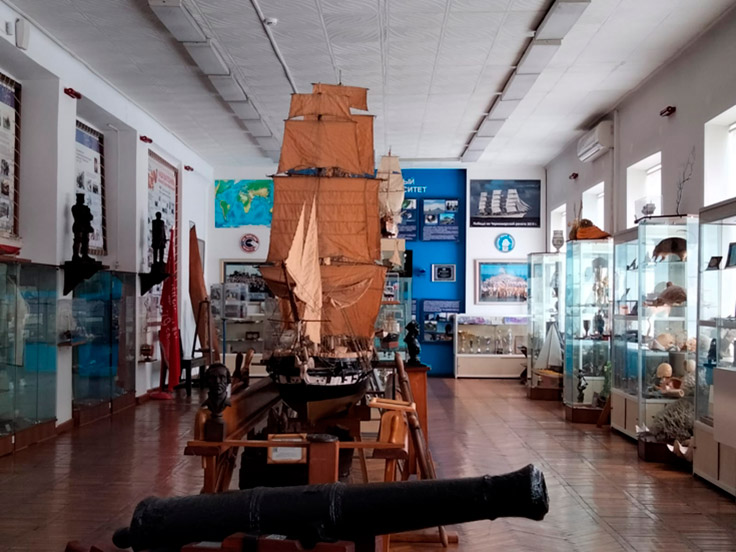
What could possibly unite these two completely different museums, located on opposite sides of the globe? The prestigious, enormous, and world-famous Smithsonian Museum of Natural History in Washington, D.C., and the small, unassuming museum of the Far Eastern Higher Marine Engineering School (now the Maritime University), occupying just one room on the third floor of a campus in Vladivostok? One is in America, the other in Russia. One is dedicated to nature, the history of the Earth, and mineral resources, the other to the history of maritime development in the Russian Far East. One is visited by millions of guests, the other sometimes has days without visitors at all. And yet, they are united by one man…
Quite a long time ago, thirty-six years ago, to be precise, this man graduated from the Vladivostok Maritime Academy with a degree in Navigation. However, he didn't go to sea, remaining instead as a programmer at the same academy. Thus began the journey of an outstanding gem cutter, who at the time had no idea what lay ahead. Much later, looking back, he acknowledges that each field of activity fate threw at him, like bricks in a wall, provided knowledge and qualities that helped him develop his talent. Navigation training gave him precision, accuracy, attention, and self-control; an economics education and work in the financial market gave him an understanding of business principles; a passion for mountaineering and mountain tourism gave him the ability to overcome challenges; participation in international literary competitions and the publication of his poems and fairy tales provided an opportunity for creative self-realization. Thus, gradually, by the age of forty, he approached his life's main work – the art of gem cutting.
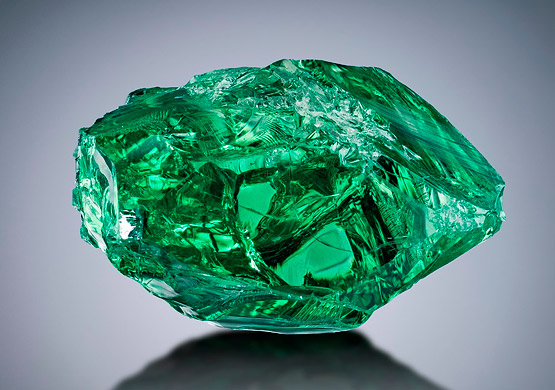
We are gradually approaching the main theme of our story. Thanks to his commitment to precision and perfection, backed by patience and self-control, this man achieved the highest level of cutting technique, winning several international competitions. Through his active participation in exhibitions, conferences, and symposiums around the world, his name became widely known in the gemstone market and a stable clientele developed. It's no surprise that when the American company BRIDGES TSAVORITES, whose founder, Campbell Bridges, first discovered the beautiful green tsavorite garnet, began searching for a master to cut a unique 283-carat crystal, they chose Viktor Tuzlukov.
The work lasted several months. Initially, Victor worked from home, developing, researching, and optimizing the cutting design. Around ten different options were proposed, 3D models were created, and the resulting colors were analyzed, taking into account internal reflections. Finally, when everything was ready, Victor flew to Arizona, USA, to begin cutting the stone, where the necessary equipment had already been purchased specifically for the job.
BRIDGES TSAVORITES is the undisputed market leader in these amazing stones and is renowned for its high standards of craftsmanship. Therefore, the cutting had to be meticulously precise—other options were not even considered. It was essential to precisely fit the chosen cut design into the original crystal, orient it correctly to maximize weight (remember, each carat of this material costs tens of thousands of dollars, and the price of the stone itself runs into the millions!), and at the same time maintain proportions, symmetry, and polishing quality to ensure the stone was as beautiful and harmonious as possible. Three weeks of intense work ensued. Each of the nearly two hundred facets underwent four stages of processing: rough and fine grinding, grinding, and polishing. The precision was so precise that the last surface cracks were eliminated during the grinding stage, maintaining perfect symmetry! It's impossible to describe the sense of responsibility—not so much because of the stone's enormous price, but because of its uniqueness. There is no other such example in the world; it could not be damaged!
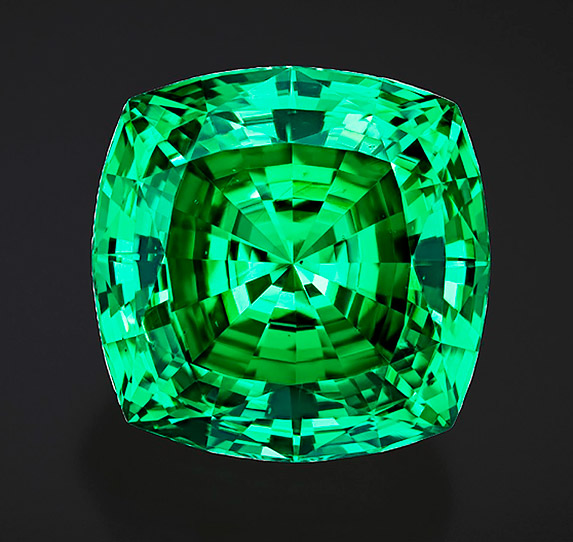
Finally, the stone was ready. Both the craftsman and the owners hoped its weight would exceed 100 carats, although precision cutting typically leaves only 30-35 percent of the original material. When the gem was weighed, everyone breathed a sigh of relief: the final weight was 116.76 carats, or 41.1 percent of the original rough! It was the largest precision-cut tsavorite, the largest cushion-cut tsavorite, and the largest tsavorite ever cut in America! The stone even received its own name – "The Lion of Merelani," named after the area where it was found. Of course, this stone needed a worthy home. And a more worthy home is probably hard to imagine.
BRIDGES TSAVORITES, in collaboration with SOMEWHERE IN THE RAINBOW, one of the world's most renowned and respected private jewelry collections, donated the stone to the Smithsonian Institution's Natural History Museum, where it was included in the permanent exhibition alongside such renowned gems as the Hope Blue Diamond and the enormous Don Pedro aquamarine. The entire Bridges family, the owners and curators of the Somewhere in the Rainbow collection, and the master cutter, who was visiting the Smithsonian for the first time as a guest of honor, were invited to the ceremony.
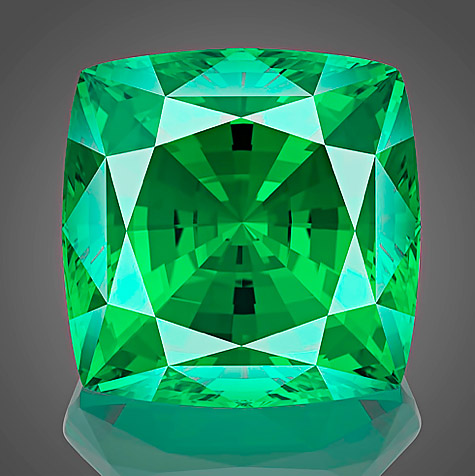
But why did we mention two museums at the beginning of this article? While working on the design, Victor made a test stone of approximately the same cut and size—from an inexpensive synthetic green garnet, similar in optical properties to natural tsavorite. He wanted to test the accuracy of the 3D model and the real stone. The design was finally approved only after this comparison. Victor donated this yttrium-aluminum garnet test stone to the museum of his alma mater, where he studied for six years and where his career and creative path began. Since Victor considers the "Lev Merelani" one of his most significant achievements, it was symbolic for him to leave its prototype there, at his roots. Thus, an invisible connection was forged between a leading museum in the United States and a modest museum at a Russian university that remembers and is proud of its alumnus.
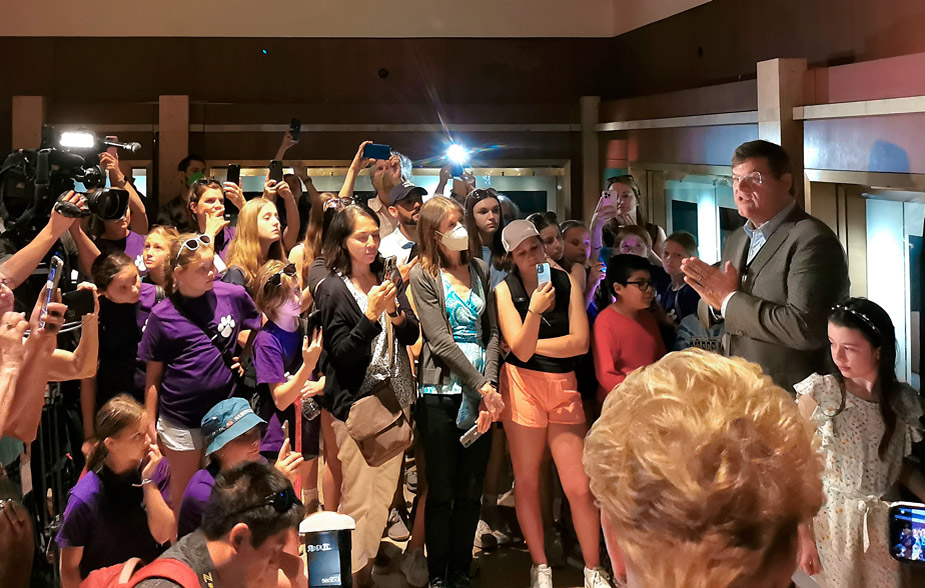
Smithsonian Director Kirk Johnson opens the stone exhibit.
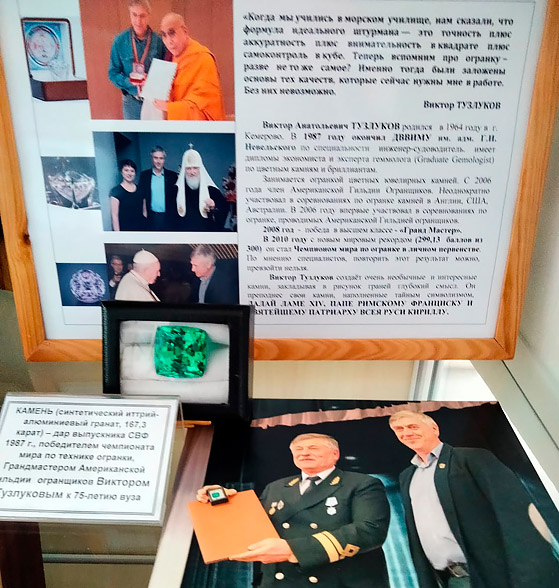
Touchstone in the Maritime University Museum
Jounalism
- Two Museums
- Precision Cutting in Thailand
- The Symbolism of Gemstone Cutting
- The Global Success of the Russian School of Cutting
- The Diamond's Younger Brother
- About the Energy of Cut Stones
- Interview with Myself
- Invitation to the Tale
- It's Time to Collect Stones
- Mexico. Echo of Bygone Times.
- Other Articles